
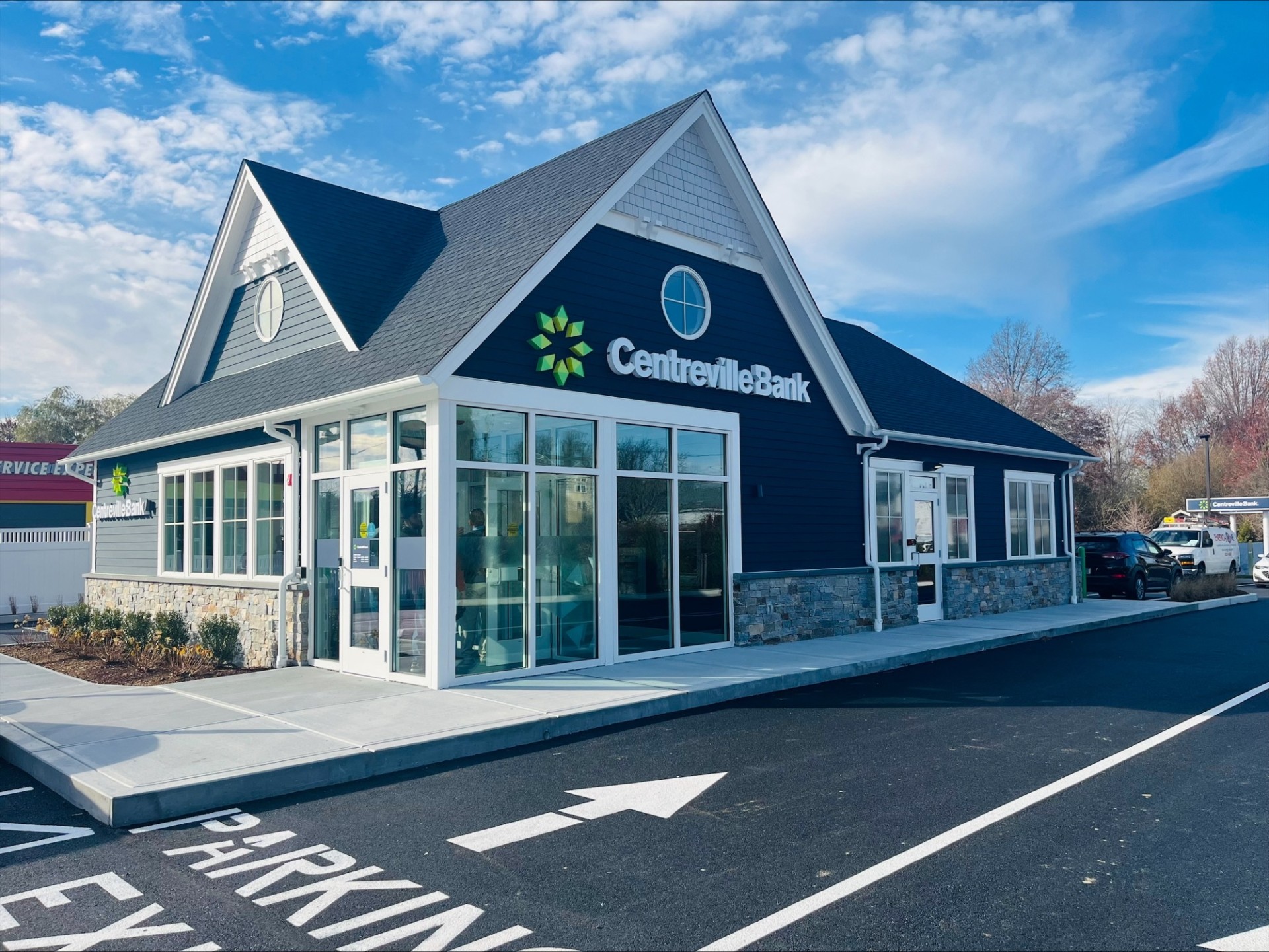
A bank branch is a small roof with outsized stakes. The flat roof over a typical branch is modest in square footage, but it sits at a busy intersection where everyone driving by sees the building, it carries a drive-through canopy that complicates the whole envelope, and it shelters operations — the vault, the server room, the teller line — where even a minor drip closes the branch for the day. The work that protects a financial building in Baton Rouge is the careful handling of canopies, penetrations, and secure access, not the volume of membrane involved.
Financial buildings across the Baton Rouge market
The footprint here is wide. Retail branches line the high-traffic corridors — Bluebonnet Boulevard, Siegen Lane, Coursey Boulevard, Jefferson Highway, and out along Airline Highway and Florida Boulevard — usually as small standalone pad sites or end-cap buildings in retail centers. Regional and community banks and a strong set of Louisiana credit unions operate headquarters and operations buildings in the office districts around Essen Lane, United Plaza, and the Bluebonnet office corridor, and downtown along Third Street where the larger corporate financial offices sit. As the state capital, Baton Rouge also carries a deep base of financial-services and back-office buildings tied to government and the regional economy. The building types run from a single drive-through branch to a multi-story corporate office, and the roofing problem shifts accordingly.
What makes a small bank roof complicated
The penetration density on a branch is higher than the footprint suggests. A drive-through canopy ties into the building, an ATM kiosk has its own enclosure, a standby generator needs a rooftop exhaust path, and the server room runs precision cooling units — each one a discrete flashing requirement on a roof that might otherwise look simple. The single biggest recurring problem we find on retail bank properties is the drive-through canopy-to-building transition. That junction takes thermal cycling, vehicle and wash overspray, and differential settlement all at one detail, and the standard retail flashing it usually got is not built to hold up to that combination long-term. We treat the canopy transition as its own line item, evaluate it separately, and re-flash it with a detail designed for the movement it actually sees — because replacing the field membrane alone never fixes a leak that originates at the canopy.
The roofs themselves are high-visibility. On a small pad site, the parapet, edge metal, and any visible roof slope are part of the brand's curb appeal, so a sloppy edge or a patched-over membrane reads to every customer in the drive-through lane. We hold the visible details to a finished standard, not a back-of-house one.
There is also a continuity dimension that does not exist on most retail. The server and IT rooms behind a branch keep the location connected to the bank's network, and water reaching that equipment can take the branch offline well beyond the footprint of the drip itself. We identify those rooms before we start, sequence the roof above them carefully, and keep the cooling units that serve them protected and running through the work — the goal is a reroof the branch barely notices, not one that knocks out a teller line for a day.
Security shapes the schedule before the roof does
Access at a financial building is governed more tightly than at almost any other commercial property type. Contractor badging, escort requirements near vault-adjacent areas, and camera documentation of crew activity are standard at bank-owned properties, and they take lead time. We build the security coordination into the bid schedule and the crew credentialing up front so it is a known cost and a known timeline, not a surprise after the contract is signed. Where a vault or other sensitive area sits below a work zone, we locate it from the drawings before mobilization, sequence that roof area into approved windows, and confirm with the security team that no active operations are affected by vibration or temporary access changes.
Branches are open, so we work around banking hours
Most branches run Monday through Saturday with customers and sensitive work below. We concentrate the loud tear-off and installation into off-hours and weekends where the scope allows, confirm a watertight dry-in before the branch opens each morning, and coordinate noise limits during customer service hours with the branch manager and corporate facilities team.
Portfolio and single-site work
Many institutions here own multiple branches under a centralized real estate group, and the national banks run preferred-vendor programs with standardized scope documentation and national account pricing. We work within those structures for portfolio accounts — standardized scoping, documentation, and a single project-management contact across the sites — and directly with community banks and credit unions managing one property at a time. Either way the closeout package is the same: insurance and license verification before mobilization, a pre-construction safety plan, daily work and dry-in reports, manufacturer warranty registered in the owner's name, and the final permit and inspection documents.
Bank & Financial Building Roofing Questions
How do you schedule around banking hours?
We concentrate active tear-off and installation into off-hours and weekends where the scope allows, with a watertight dry-in confirmed before the branch opens each morning. Work windows, noise limits during service hours, and any security escort needs are coordinated with the branch manager and corporate facilities.
How do you handle the drive-through canopy connection?
The canopy-to-building transition is treated as its own flashing item, not rolled into the field membrane. We evaluate it separately and, where it has deteriorated, re-flash it with a detail built for the differential movement it sees. This is the most common chronic bank leak, and it is never fixed by replacing the field membrane alone.
What documentation do financial institutions require?
Typically insurance certificates and license verification before mobilization, a pre-construction safety plan, daily work and dry-in reports, manufacturer warranty registered in the owner's name, and a final permit and inspection package. We work within each institution's vendor management process for approved-contractor registration.
Can you work over an active vault or secure area?
Yes. We locate vault and sensitive areas from the drawings before mobilization, sequence those roof zones into approved windows, and confirm with security that no active operations are affected by vibration or temporary access changes.
Do you handle multi-site bank programs?
Yes. Portfolio programs are a regular part of our work, with standardized scoping, documentation, and pricing across the sites and a single project-management contact for the corporate facilities team.