
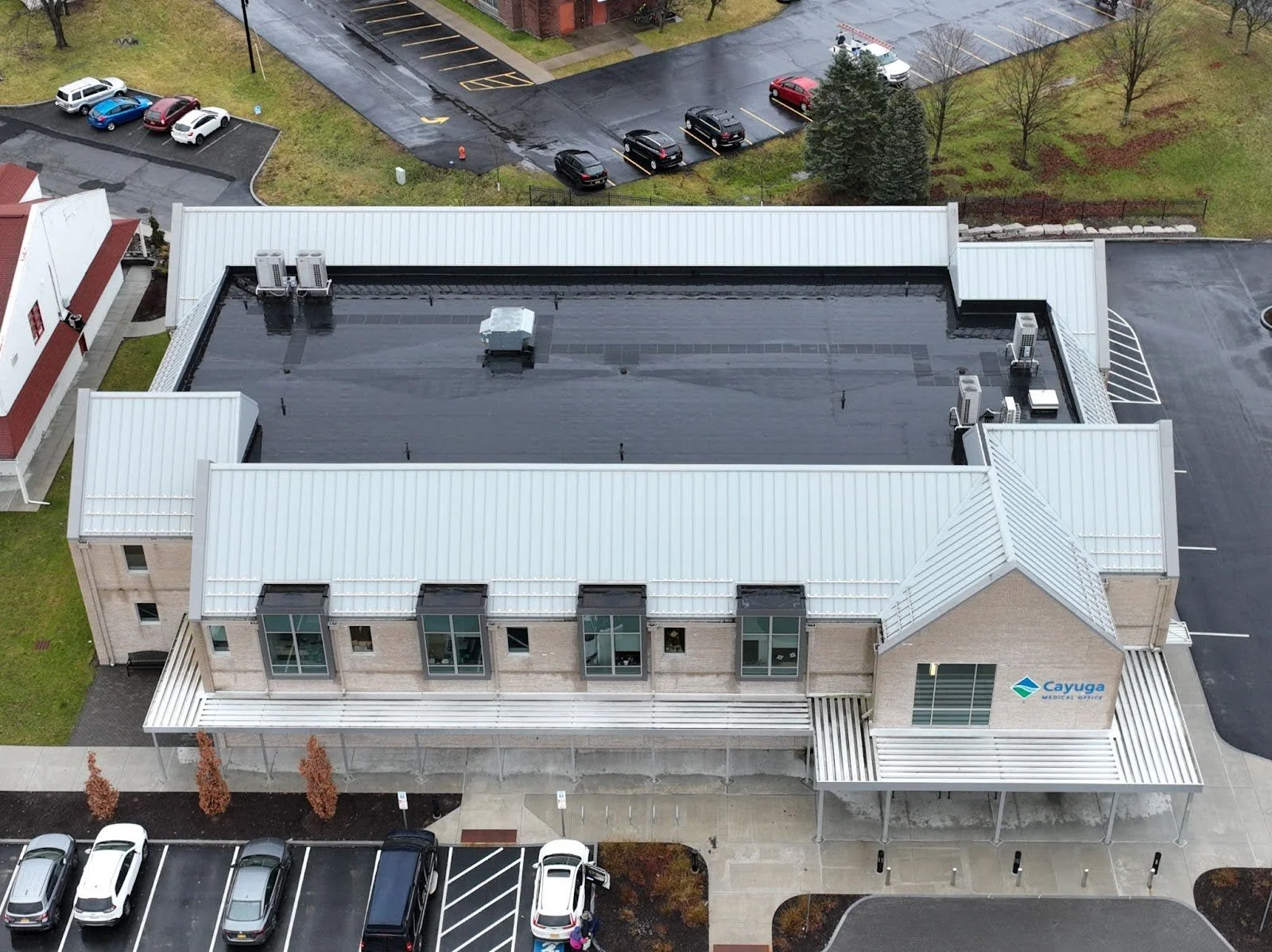
Baton Rouge is home to one of the most dynamic healthcare markets in the Gulf South. Our Lady of the Lake Regional Medical Center on Hennessy Boulevard is the largest hospital in Louisiana by licensed bed count, and its campus has been the anchor of a sprawling medical corridor that extends northward toward the Essen Lane and Perkins Road physician office corridors. Baton Rouge General's Mid City campus and its newer facility at Bluebonnet Boulevard serve the city's east and south sides, while Ochsner Health's growing presence in the capital region has added specialty facilities, urgent care networks, and medical office buildings throughout the metro. For commercial roofing contractors, this concentration of healthcare real estate represents a demanding specialty market—one where the standards for workmanship, scheduling, and regulatory compliance are far more stringent than in any other commercial sector.
Southeast Louisiana's climate is among the most challenging in North America for commercial roofing systems. Baton Rouge averages more than 60 inches of annual rainfall, with intense summer convective storms, tropical systems that can dump a foot or more of rain over 24 to 48 hours, and a hurricane exposure that requires serious wind uplift engineering on any building in the region. The remnants of tropical systems regularly push sustained heavy rain events across the capital region, and a medical facility roof that develops even a minor open seam during one of these events can sustain catastrophic interior damage before the storm passes. Our hurricane preparedness protocols for Baton Rouge healthcare clients include pre-season roof inspections to identify and address any vulnerabilities before the June through November Atlantic hurricane season places maximum stress on the building envelope.
The humidity of the Louisiana climate creates additional challenges specific to roofing over sterile and sensitive healthcare environments. Roof sections that allow even minor moisture infiltration can develop concealed mold growth within days in Baton Rouge's subtropical humidity. For hospitals and surgical centers where infection control is a patient safety imperative, the speed with which moisture can translate into mold colonization makes preventive maintenance and rapid leak response critical. Our post-storm assessments for Baton Rouge healthcare clients are conducted within 24 to 48 hours of any significant tropical or convective event, allowing us to identify and address new vulnerabilities before the next rain event arrives—which, in Louisiana, often means within the next 48 hours.
Our Lady of the Lake's main campus and the Baton Rouge General facilities require formal Infection Control Risk Assessments before any roofing work above occupied patient areas can begin. Louisiana Department of Health oversight and Joint Commission accreditation standards both create regulatory accountability for construction activity in occupied healthcare facilities, and our project managers are experienced in the ICRA coordination process that these facilities require. We establish physical containment barriers at all penetrations connecting roof deck to occupied spaces, coordinate with infection preventionists on daily work plans, and maintain documentation that demonstrates compliance with both LDH and TJC requirements throughout each project phase.
The hurricane exposure in Baton Rouge creates a specific engineering requirement for healthcare facility roofing that contractors from other regions may not appreciate. ASCE East Baton Rouge Parish in wind speed zones that require higher-than-average uplift resistance in roofing assemblies, and the healthcare consequence of any wind-driven envelope failure—patient exposure, disrupted operations, contaminated sterile environments—makes the standard commercial minimum unacceptable. We specify FM Global-approved assemblies for Baton Rouge healthcare work with uplift resistance ratings that exceed code minimums, and we use mechanical fastening patterns at perimeters and corners designed for the dynamic pressure loads that tropical systems generate. Our hospital clients have documented this approach with their property insurers and in several cases received premium adjustments reflecting the higher-than-code installation standard.
Medical gas infrastructure on Baton Rouge's hospital campuses includes the full complement of clinical gas systems required by modern acute care facilities, and each riser penetrating the roof deck represents a potential leak point that must be treated as a custom detail. The Our Lady of the Lake campus has undergone multiple expansion phases, and the resulting rooftop contains a complex mixture of legacy penetrations from original construction, additions from successive renovation cycles, and recently installed systems—all requiring individual assessment and custom flashing solutions. Our pre-project penetration survey documents every condition and gives facility engineering a clear picture of what the reroofing project will address at each point.
The assisted living and long-term care sector in Baton Rouge has expanded significantly to serve the region's aging population, with major facilities along the Highland Road corridor and in the Gonzales and Prairieville areas to the south and east. These facilities operate under Louisiana Department of Health licensing with physical plant standards that create regulatory exposure from maintenance failures, and the subtropical climate makes mold growth from roof leaks a particularly rapid and serious concern. We have established relationships with several long-term care operators in the capital region and provide the inspection documentation and rapid response capabilities that these facilities need to maintain LDH compliance and protect their resident populations.
Outpatient surgical centers and specialty procedure facilities in Baton Rouge occupy a growing share of the healthcare real estate market as physicians and health systems shift procedures to lower-cost ambulatory settings. Many of these facilities are accredited by AAAHC or The Joint Commission and face the same infection control, fire safety, and construction management standards as hospital facilities. After-hours reroofing is standard practice for these centers—we complete each zone's work during evening and weekend sessions so that procedure schedules are unaffected. For freestanding emergency departments operated by Baton Rouge General and Lane Regional Medical Center in the surrounding parishes, we apply the same zero-exposure overnight-completion approach used for full-service EDs.
Preventive maintenance in Louisiana's climate is not an optional budget item for healthcare facility managers—it is a financial and regulatory necessity. A roof that is not maintained through Baton Rouge's 60-inch annual rainfall, tropical season, and high-humidity subtropical environment will fail in ways that generate costs far exceeding the maintenance investment. Our maintenance contracts for Baton Rouge healthcare facilities include a dedicated pre-hurricane-season inspection each May, biannual scheduled inspections, post-tropical-event assessments, and 24-hour emergency response for active leaks. Electronic documentation is maintained in formats compatible with the facilities management systems used by Our Lady of the Lake, Baton Rouge General, and the Ochsner capital region network, ensuring that maintenance history is accessible for accreditation surveys, insurance renewals, and capital planning discussions.
- How do you prepare Baton Rouge healthcare facility roofs for hurricane season?
- We conduct pre-season inspections each May to identify and address any seam lifting, flashing deficiencies, or drain blockages before June 1. Our hurricane preparedness service for contracted healthcare clients includes emergency response mobilization within 24 hours after any named storm event and temporary emergency repairs before interior protection is prioritized.
- What wind uplift standards apply to healthcare roofing in East Baton Rouge Parish?
- We design healthcare roofing assemblies to exceed ASCE 7 wind uplift requirements for the Baton Rouge wind zone, using FM Global-approved assemblies with mechanical securement patterns designed for tropical storm dynamic pressure loads. This exceeds code minimum and is documented for property insurance underwriting purposes.
- How quickly does mold develop from a roof leak in Baton Rouge's climate?
- In Louisiana's subtropical humidity, mold colonization can begin within 24 to 72 hours of a moisture intrusion event. This is why our healthcare maintenance contracts include post-storm assessments within 24 to 48 hours after any significant rain event—catching infiltration before mold establishes is far less costly than remediation after the fact.
- Do you perform ICRA-compliant reroofing at Our Lady of the Lake's main campus?
- Yes. We coordinate directly with OLOL's infection control department and facilities engineering team, completing formal ICRA documentation before work begins above any patient care area. Physical containment barriers, daily work plan coordination, and LDH/TJC-compliant documentation are standard features of every project on the OLOL campus.
- Can you reroof outpatient surgical centers in Baton Rouge without disrupting procedure schedules?
- Yes. We phase all work for ambulatory surgery centers so that each zone is completed during overnight or weekend sessions, with fully weathertight conditions restored before the facility opens for procedures each morning. No zone is left open or exposed above a functioning surgical suite at any time.