
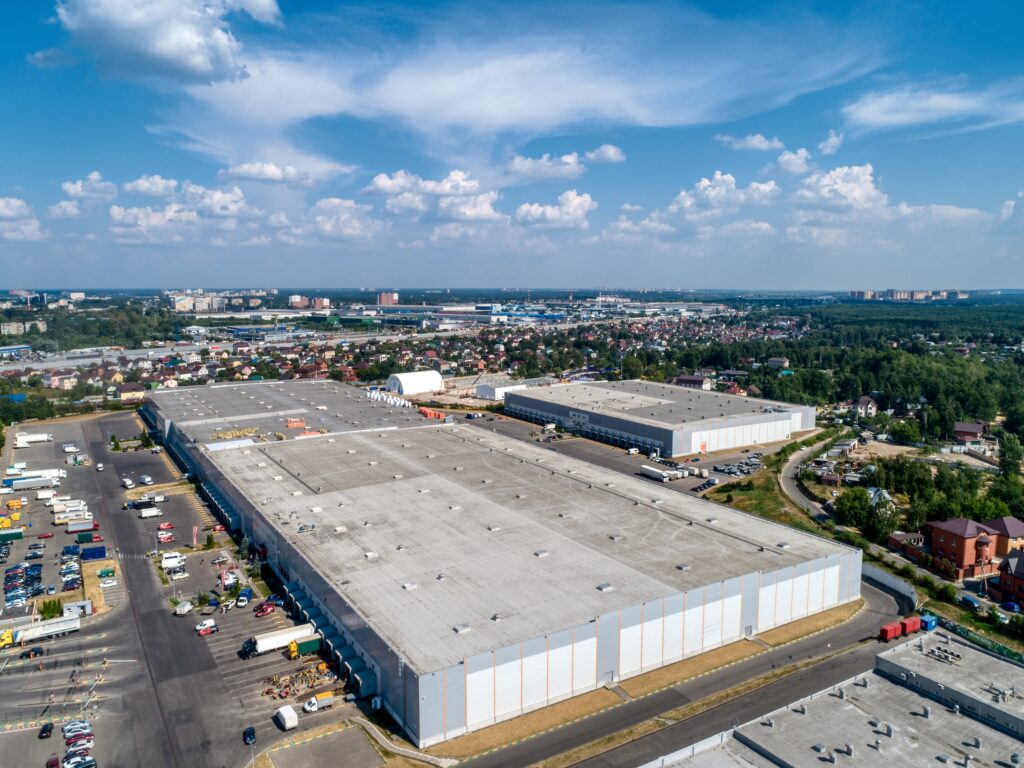
The Amazon distribution center and multiple petrochemical supply-chain warehouses along Baton Rouge's industrial corridor — concentrated near the Port of Greater Baton Rouge and the intersection of I-10 and I-110 — represent a warehouse roofing market shaped by one of the most demanding climate environments in North America. Louisiana's subtropical heat, extreme humidity, hurricane risk, and very high annual rainfall create roofing challenges that require both material selections and flashing details calibrated for conditions that no other region quite replicates.
Annual rainfall in Baton Rouge averages over 60 inches, making it one of the wettest major cities in the continental United States. For a large flat warehouse roof, this volume of water demands drainage engineering that far exceeds what would be specified in drier markets. Baton Rouge commercial roofing contractors size primary drains and overflow scuppers for the intensity-duration-frequency curves published by the Louisiana Department of Transportation, which reflect storm intensities that can deliver 3 or more inches per hour during convective events. Double-drain systems — with primary and secondary drains at every low point — are standard practice for large distribution buildings in East Baton Rouge Parish.
Hurricane and tropical storm risk is the defining extreme weather consideration for Baton Rouge warehouse roofing. Wind uplift requirements in Louisiana follow ASCE 7 for a basic wind speed of 130 mph or higher in many Baton Rouge-area zones, reflecting the city's vulnerability to Gulf of Mexico hurricane tracks. Roofing systems must meet FM Global or UL-listed uplift ratings appropriate for the calculated design wind pressures, and edge metal — parapet caps, gravel stops, and drip edges — must be mechanically fastened with the fastener spacing and substrate requirements of the applicable FM or UL table. A poorly attached roof edge on a 600,000-square-foot Baton Rouge warehouse can become a catastrophic failure initiator under hurricane-force winds.
Humidity and heat make EPDM adhesive bonding and TPO seam integrity more challenging in Baton Rouge than in most other markets. The combination of surface moisture, ambient humidity during installation, and high temperatures requires strict quality control protocols for membrane installation. TPO heat-welded seams must be performed at the proper welding temperature and speed, conditions that are difficult to maintain when ambient temperatures are 95°F and humidity is 85%. Experienced Baton Rouge commercial roofing contractors schedule welding operations in the early morning hours and provide in-field probing of all seams as a standard quality assurance step.
Dock door and truck court flashing on Baton Rouge distribution buildings must manage rainfall intensities that can reach 4 to 5 inches per hour during the most severe convective events. Standard flashing heights adequate in moderate climates can be overwhelmed by horizontal wind-driven rain during Baton Rouge thunderstorms, and counterflashing heights at dock canopy intersections are typically specified at 12 to 18 inches above the roof membrane surface rather than the 8 to 10 inches common in northern markets. Penetration mastics and sealants must be compatible with Baton Rouge's continuous high-UV and high-temperature environment.
Ventilation on Baton Rouge's warehouse buildings addresses the combination of intense summer heat and the high moisture content of Gulf air. Large distribution facilities must manage both temperature and humidity to protect products and maintain worker safety, and the rooftop ventilation equipment runs aggressively year-round. Penetration flashings for exhaust fans and make-up air units must be sealed with materials that resist the biological growth that Baton Rouge's warm, moist conditions promote — standard pitch pockets and open-top penetrations can become moisture traps that harbor algae and degrade sealants within a single season.
Energy efficiency for Baton Rouge warehouse roofing is almost entirely a cooling-cost consideration. The city has over 2,700 cooling degree days annually and fewer than 200 heating degree days. White TPO membranes meeting ASHRAE 90.1 reflectance requirements are standard for Baton Rouge commercial roofing, and Louisiana has adopted energy code provisions for commercial buildings that include minimum R-values for low-slope roofs in Climate Zone 2A. For climate-controlled distribution facilities spending significant sums on air conditioning through a 9-month cooling season, above-code insulation and high-reflectance membranes deliver real and measurable operating cost reductions.
Cost per square foot for warehouse roofing in Baton Rouge reflects the premium for hurricane-rated systems and the higher-performance materials required in this climate. TPO re-roofing with FM-compliant edge metal on a large Baton Rouge distribution center runs $9 to $14 per square foot installed; full tear-off with new polyiso insulation and hurricane-rated attachment runs $16 to $22 per square foot. These costs are higher than comparable work in interior southern cities, reflecting both the performance specification requirements and the episodic cost of post-hurricane labor and material demand that affects the Gulf Coast contractor market.
Post-storm emergency response capability is a critical selection criterion when choosing a commercial roofing contractor for Baton Rouge warehouse operations. Hurricane and tropical storm seasons can leave multiple facilities damaged simultaneously, creating intense demand for roofing labor that national contractors without local relationships struggle to satisfy. Baton Rouge's established industrial roofing contractors maintain emergency material stockpiles and prioritized response protocols for contract clients, providing the rapid temporary protection that preserves inventory and allows distribution operations to resume while permanent repairs are planned.
- What drainage specifications are required for Baton Rouge warehouse roofs given 60+ inch annual rainfall?
- Primary and secondary drains at every low point are standard practice for large Baton Rouge distribution buildings. Drainage is sized to Louisiana DOTD IDF curves for local storm intensities, which can reach 3 or more inches per hour during convective events — far exceeding drainage requirements in most other US markets.
- What wind uplift standards must Baton Rouge warehouse roofs meet for hurricane protection?
- ASCE 7 basic wind speed for many Baton Rouge locations is 130 mph or higher. FM Global or UL-listed uplift ratings appropriate for these design pressures are required for both the membrane system and edge metal. Improperly attached roof edges are a primary failure initiator under hurricane-force winds.
- Why is membrane installation quality control more critical in Baton Rouge than northern markets?
- High ambient temperature (95°F+) and humidity (85%+) create difficult installation conditions for both TPO heat welding and EPDM adhesive bonding. Experienced Baton Rouge contractors schedule welding in early morning hours and probe all seams on the same day as installation to catch quality deficiencies before membrane covers them.
- What energy code governs warehouse roofing insulation in Baton Rouge?
- Louisiana's commercial building code references ASHRAE 90.1; Baton Rouge falls in Climate Zone 2A with minimum R-value requirements for low-slope commercial roofs. With over 2,700 annual cooling degree days, above-code insulation and high-reflectance TPO deliver measurable cooling cost reductions for climate-controlled distribution facilities.
- What is the cost premium for hurricane-rated warehouse roofing in Baton Rouge?
- TPO re-roofing with FM-compliant edge metal runs $9 to $14 per square foot installed in Baton Rouge; full tear-off with hurricane-rated attachment and new insulation ranges from $16 to $22 per square foot. These figures are notably higher than interior southern cities, reflecting hurricane-performance specification requirements and Gulf Coast post-storm labor demand dynamics.