
Two enemies pulling in opposite directions
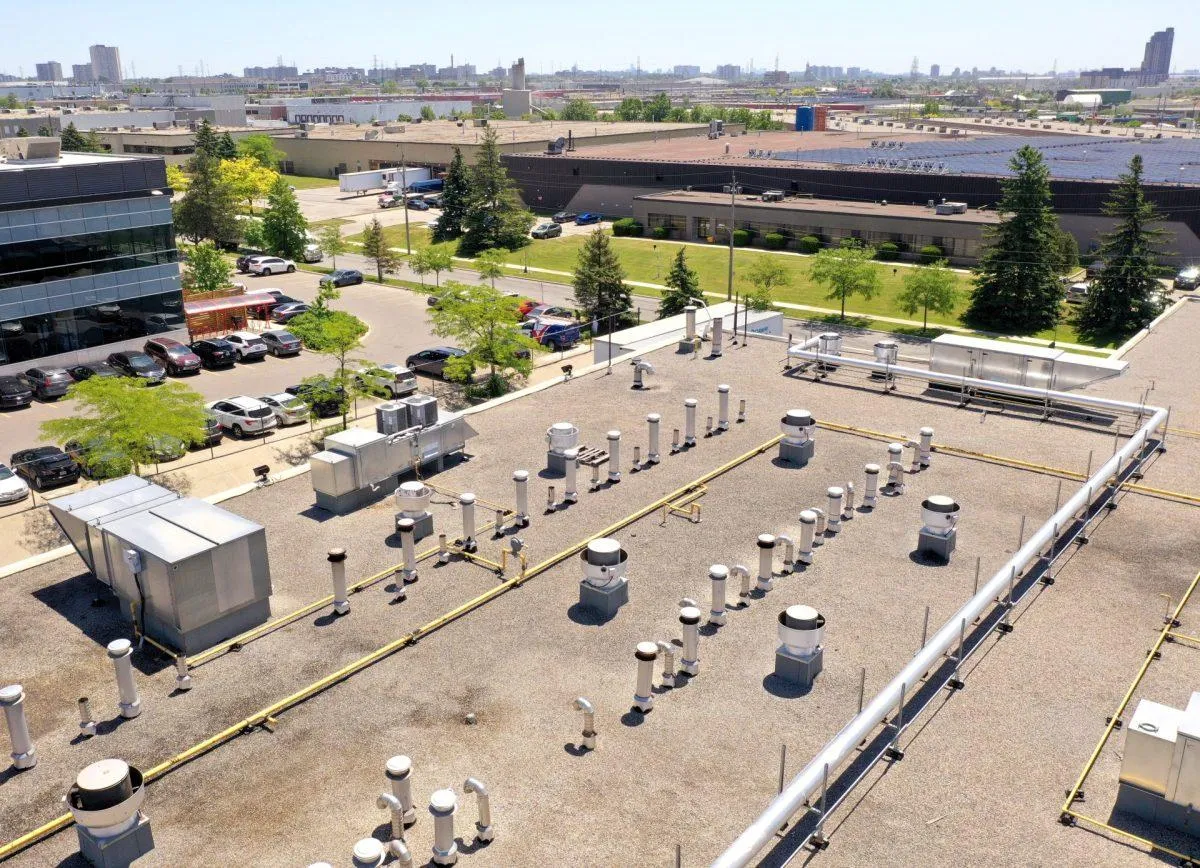
A food plant roof fights a battle on two fronts that rarely line up. Inside, daily washdown sanitation floods the production floor with hot water and pushes warm, saturated air straight up against the deck. At the same time, freezer rooms, chill rooms, and blast-freeze cells underneath drive cold the other way. The result is a roof assembly with steam shoving moisture up from one bay and a refrigerated space pulling the dew point inward from the next, and our Baton Rouge climate, with summer dew points parked in the 70s, leaves that warm humid air with almost nowhere to dry out. Get the vapor control wrong and the deck corrodes and the insulation rots from the inside, with no leak ever showing on the surface.
Baton Rouge and the parishes around it carry a substantial food-and-beverage manufacturing base, and those plants do not sit in pretty office parks. They cluster along the industrial spine, the Choctaw Drive and Scenic Highway corridor north of downtown, the warehouse and processing district around Baton Rouge Metropolitan Airport and Harding Boulevard, the Airline Highway run, and the food and ag-processing operations stretching down through Port Allen and Ascension Parish toward Gonzales. Sugar refining and packaging, coffee and seasoning, commercial bakery, beverage, and cold-storage distribution are all represented, and each one carries USDA or FDA facility expectations that reach all the way up to the roof.
Not every membrane is allowed up there
The membrane spec on a food plant starts with what is acceptable above the specific production environment, not with what is cheapest per square. Not every commercial membrane is approved for use over food-contact zones. White TPO and PVC single-ply are generally acceptable above enclosed processing areas, but the exact product formulation and installation method have to be confirmed against the plant's food-safety plan. The same scrutiny applies to the adhesives, primers, and sealants in our flashing details, since plenty of standard roofing adhesives carry solvents that have no place over a production line. We sort that out with the plant's QA team before we specify anything.
The roof above the cold side
Refrigerated spaces are where the assembly design earns its keep. A roof over a freezer or blast-freeze room has to maintain the thermal continuity of the cold chain, or condensation forms inside the assembly. We design tapered insulation above refrigerated bays around the actual operating temperatures and the direction the vapor drives in our climate, which for a freezer in humid south Louisiana is relentlessly inward. Ponding water over a cold room is doubly bad: it loads the refrigeration system and feeds deck corrosion at the same time. We move that water to functioning drains and keep it off the cold bays.
The plant runs the clock, not us
Food plants in this market often run two or three shifts with a single weekly sanitation window as the only time the floor is down and clean. Any work that opens the envelope over an active production area has to fit inside that window, with the production team and the QA manager confirming the floor is clean and protected before we start. We phase the project around the production calendar rather than asking the plant to bend around us, and work over refrigerated areas gets coordinated with the refrigeration maintenance crew so nothing we do interrupts cold-chain continuity.
When water gets in during production
A leak over a running line is not a slow-walk repair. Our emergency protocol for food plants starts with immediate contact to the plant's QA and facilities team for product-hold evaluation and documentation, then priority mobilization for a temporary dry-in, then the records support the plant needs for its own incident reporting. We hand over emergency contact information at closeout on every food-processing project so that call is one number, not a scramble.
Built to survive an inspection
Roof condition is a standard line item in USDA and FDA facility inspections. Inspectors look for leak evidence, condensation, and deterioration that could become a moisture-entry point over production. We provide condition documentation and repair records a QA manager can put in front of an inspector to show the roof is being maintained on purpose, not patched in a panic.
What helps us scope your plant
- The regulatory framework, USDA, FDA, or state food-safety, and your food-safety plan's material requirements
- Which roof areas sit over refrigerated rooms and their operating temperatures
- Your shift schedule and the weekly sanitation window
- Where ceiling staining, condensation, or active leaks are showing up inside
- Rooftop refrigeration and HVAC layout and any recent equipment additions
Food Processing Facility Roofing Questions
Can you use any membrane over a food production area?
No. USDA and FDA-regulated plants require the membrane, adhesives, primers, and sealants to be confirmed acceptable for the production environment before installation, and that is not uniform across every product. We identify your regulatory framework and confirm material acceptability with the plant's QA team before specifying anything over a food-contact zone.
How do you schedule work in a plant that runs continuously?
We build the schedule around your production calendar. We work with the facilities manager to find the weekly sanitation window and any planned shutdowns where work over the floor can proceed, and we coordinate any work over refrigerated areas with the refrigeration maintenance team so cold-chain continuity is never interrupted.
How do you handle drainage over refrigerated rooms?
Ponding water over a freezer or chill room adds thermal load to the refrigeration system and feeds deck corrosion, so drainage design is critical. We specify tapered insulation to move water to perimeter scuppers or interior drains at the low point of each bay, and we confirm the drainage matches the refrigeration system's thermal needs for the roof above.
What happens if a leak occurs during active production?
A leak over a running line means immediate contact with your QA and facilities team for product-hold evaluation and documentation. Our food-plant emergency protocol includes 24-hour contact, priority mobilization for temporary dry-in, and records support for your incident reporting. We provide that emergency contact information at project closeout.
Do you support USDA and FDA inspections?
Yes. Roof condition is a standard inspection item, and inspectors look for leaks, condensation, or deterioration above production areas. We provide condition documentation and repair records your QA manager can produce during an inspection to demonstrate proactive maintenance.